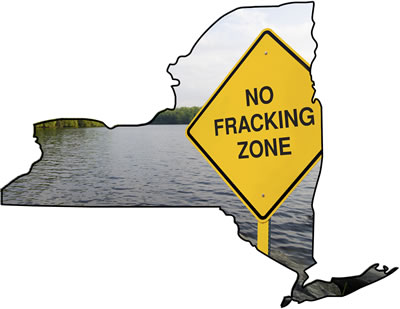
Following through on Governor Andrew Cuomo’s promise, the Acting New York State Department of Health (DOH) Commissioner, Dr. Howard Zucker, released the findings of his department’s long delayed health study of hydraulic fracturing in New York State.  According to Dr. Zucker, hydraulic fracturing poses serious concerns to public health and data that proves otherwise does not exist.  As a result, and as others have noted, Dr. Zucker concluded that he “cannot support high volume hydraulic fracturing in the great state of New York.” Continue Reading High Volume Hydraulic Fracturing Banned in New York State

New York’s Brownfield Cleanup Program (BCP) is among the most successful brownfield programs in the nation, driving millions of dollars of investment across the state, and in particular, upstate cities that have benefited greatly from this important economic development tool.

The BCP is due to sunset at the end of 2015.  Given the lead time that most significant brownfield projects have, both houses of the New York State Legislature recognized the chilling effect this sunset date has had, and will continue to have, on critical development projects.  Accordingly, they passed bills early this summer to extend the BCP through March 31, 2017. Continue Reading New York’s Brownfield Cleanup Program In Limbo

In several recent remarks, Governor Andrew Cuomo has indicated that the long-delayed health study of hydraulic fracturing by the New York State Department of Health will be released before the end of 2014.  Speaking Monday on the Capital Pressroom radio show, Cuomo referred to pending decisions on natural gas development and casinos, stating that “by the end of the year we should have positions on both that are clear and we’ll start the new year with some major decisions under our belt, so to speak.”  Likewise, last Friday, Cuomo told reporters that he expected the health study to be completed before the end of the year.  At least one media outlet has noted that Monday’s statement is the first indication that the release of the health study will come along with the state’s “final position.”  These comments, however, leave everyone guessing as to what the “final position” will be, what form the “final position” will take, and what all of this means for the pending environmental impact statement and proposed regulations, which have been on the shelf for several years.

The Comprehensive Environmental Response, Compensation and Liability Act (CERCLA), commonly known as Superfund, was enacted by Congress to promote the expeditious cleanup of sites contaminated with hazardous substances. Through CERCLA, Congress attempted to achieve this goal by, among other things, providing funding to federal agencies, primarily EPA, to clean up certain contaminated sites and authorizing the agency to sue responsible parties for reimbursement after the site is cleaned up. Private parties may clean up a site and seek reimbursement from other responsible parties under CERCLA as well. Continue Reading SDNY Decision Penalizes Parties Who Voluntarily Clean Up Sites under New York’s Brownfield Clean Up Program

The statute of limitations (“SOL”) for seeking contribution under the Comprehensive Environmental Response, Compensation and Liability Act (CERCLA) is three years from the date of “entry of the judicially approved settlement.” But what happens if that judicially approved settlement was not based on CERCLA, and did not resolve CERCLA claims? According to a recent federal court decision, so long as the settlement resolved environmental liability for costs related to a cleanup action – even if that cleanup action was taken pursuant to a state superfund law or another federal statute like the Clean Water Act – CERCLA’s three year statute of limitations for contribution will apply. Continue Reading Clean Up a Property? The SOL for your CERCLA contribution action may begin to run a lot earlier than you thought.

For once, business and labor seem to agree: The Occupational Safety and Health Administration (“OSHA”) standards for workplace exposure to chemical hazards are badly outdated and in need of revision.  In response to these concerns, last week OSHA issued a Request for Information seeking stakeholder input into how these standards, known as permissible exposure levels or PELs, may be best updated, and on other strategies to evaluate and address workplace exposure.  In correspondence to OSHA, public health agencies and the Chamber of Commerce all agree that OSHA’s updating of its PELs is long overdue and necessary. Continue Reading OSHA Considers Changes to Work Place Exposure Limits

By Donald T. Ross

At the conclusion of its annual 2013-14 session, the New York State Legislature passed an extender (S. 7878) to the New York State Brownfields Cleanup Program (BCP) tax credits.

The BCP tax credits, which were first enacted into law in 2003, incentivize remediation and redevelopment of contaminated sites by providing credits against New York State personal or corporate income tax credits for expenditures related to cleanup and site preparation, new construction, job creation, and real property taxes paid on remediated sites. Continue Reading NYS Brownfield Cleanup Tax Credit Program To Be Extended

On Monday, New York’s Court of Appeals, its highest court, upheld the power of municipalities to prohibit hydraulic fracturing (“fracking”) within their boundaries.

The case, previously discussed here, concerned efforts by two towns to ban fracking within their boundaries after several town residents signed oil and gas leases allowing for exploration and extraction on their land. Continue Reading Fracking Alert: Home Rule Prevails In New York’s Highest Court

In a highly anticipated decision last week, the Supreme Court struck down a portion of EPA’s so-called Tailoring Rule for greenhouse gas emissions.  By its Tailoring Rule, EPA had attempted to regulate certain stationary sources under the Clean Air Act’s Prevention of Significant Deterioration (PSD) and Title V permitting programs, based solely on those sources potential to emit greenhouse gases (GHGs).  But because the numerical threshold required to trigger PSD and Title V regulation as set forth in the CAA were so low – 250 tons per year – thousands of small sources like apartment complexes, schools and churches would likely come within EPA’s regulatory purview.  Calling this result “absurd,” EPA attempted to “tailor” its regulations to subject only those sources that had the potential to emit 100,000 tons per year of GHGs to PSD and Title V obligations. Continue Reading What does the Supreme Court’s UARG decision mean for you?

In what is considered a first step towards requiring natural gas drillers to disclose the chemical constituents of hydraulic fracturing fluids, EPA recently released an Advanced Notice of Proposed Rulemaking seeking public comment on the topic.

High volume hydraulic fracturing, or “fracking” is a method of natural gas extraction by which materials, typically water, sand and chemical additives, are injected at high pressure to fracture deep layers of shale, which allows for the release of natural gas. The natural gas is then captured and surged to the surface, along with residual flow back fluids. Continue Reading EPA To Consider Mandatory Disclosure Of Chemicals Used In Fracking Fluids